How much does a driveway cost in the UK?
A new driveway laid on a proper sub-base typically costs £40 to £70 per square metre for gravel, £50 to £100 for tarmac, £60 to £150 for resin-bound and £90 to £160 for block paving, in UK guides published in 2026. A typical single drive of about 25 m² is roughly £1,000 to £4,000 depending on the surface, before any dropped kerb. In England, paving more than 5 m² of a front garden with a surface water can’t soak through needs planning permission unless the rain drains to a lawn, border or soakaway.
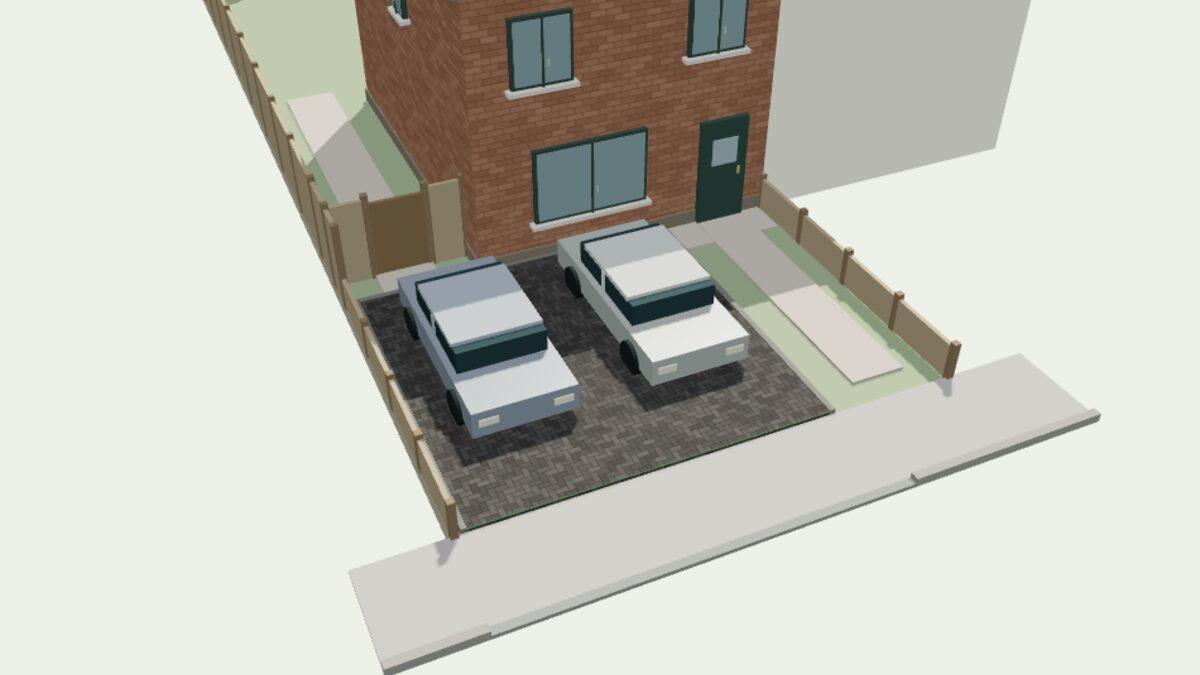
Typical installed driveway prices
| Surface | Per m² installed | About 25 m² | About 45 m² |
|---|---|---|---|
| Gravel (loose, on a sub-base) | £40 – £70 | £1,000 – £1,750 | £1,800 – £3,150 |
| Tarmac | £50 – £100 | £1,250 – £2,500 | £2,250 – £4,500 |
| Resin-bound | £60 – £150 | £1,500 – £3,750 | £2,700 – £6,750 |
| Block paving | £90 – £160 | £2,250 – £4,000 | £4,050 – £7,200 |
| Permeable block paving | £90 – £170 | £2,250 – £4,250 | £4,050 – £7,650 |
Ranges combine published 2026 guides, which vary; some quote before VAT. Totals are the per-m² range multiplied out, and small drives usually cost more per m² because the digger, muck-away and set-up costs don’t shrink. Breaking out an old drive, poor ground, difficult access and drainage add to these figures, and a dropped kerb is extra (see below). The planner prices a full takeoff, including excavation, muck-away, sub-base and edging, and adds VAT, so its figures usually sit above a guide quoted before VAT.
What you are paying for
- Digging out and sub-base: a drive takes the weight of cars, so it needs more than a patio: typically 150 mm of compacted MOT Type 1, or 250 – 350 mm of open-graded stone under permeable paving, plus muck-away.
- The surface: block paving is laid on a sand bed and compacted; resin-bound needs a sound, porous base; tarmac goes down in a binder and a surface course; gravel is cheapest but needs topping up, and a stabiliser grid stops it rutting.
- Edges: kerbs or edging set in concrete stop the surface spreading. Cheap quotes often leave them out.
- Drainage: rain has to go somewhere other than the road or the house: a permeable surface, a lawn or border, or a channel and soakaway.
Permeable surfaces and the 5 m² rule
In England, you don’t need planning permission for a new or replacement front drive of any size if it uses a permeable surface, such as gravel, permeable block paving or porous asphalt, or if rain from it runs to a lawn or border. If it covers more than 5 m² with a traditional surface water can’t soak through, and the water isn’t directed to a permeable area, you need planning permission.
These allowances are for houses, not flats or maisonettes, and can be removed by an Article 4 direction or a planning condition. Fences, walls, gates and a dropped kerb can need permission separately.
Resin-bound is permeable when it’s laid on a porous base. Resin-bonded (stones scattered onto a resin coat) is not.
Dropped kerbs
Driving across the pavement onto your property needs a dropped kerb (vehicle crossover), approved by your council. Applying is separate from building the drive, and planning permission is usually also needed on a classified road.
Costs vary a lot between councils. For example, the non-refundable application fee is about £59 in Oldham, £275 in Hackney and £475 in Waltham Forest, and Hackney puts the works at £2,500 to £7,000 depending on the pavement. Many councils build the crossover themselves or require an approved contractor, so check before you book a driveway firm.
Wales, Scotland and Northern Ireland
The 5 m² rule above applies in England.
- Wales: a new or replacement hard surface in front of a house must use permeable or porous materials, or the run-off from an impermeable surface must go to a permeable area at the front. Repairing or replacing up to 5 m² is exempt, and a listed building needs planning permission.
- Scotland: a hard surface between the house and a road has to deal with surface water: a porous material such as permeable block paving, or water directed to grass or a border. A house in a conservation area or near a listed building needs planning permission. Check with your council.
- Northern Ireland has its own planning rules, run by local councils: check with your council before paving a front garden.
Before you hire someone
- Get at least three written, itemised quotes for the same specification and area.
- Check the quote states the sub-base depth and material, the edging and how the drive drains.
- Ask whether the surface is permeable, and if not, where the water will go.
- Check whether you need a dropped kerb, and apply to the council before work starts.
- Ask for photos of recent drives and a reference you can call.
- Check their public liability insurance and agree stage payments, not most of the price up front.
Common questions
What is the cheapest type of driveway?
Gravel is usually cheapest, at about £40 to £70 per square metre in 2026 guides with a proper sub-base, followed by tarmac at about £50 to £100. Block paving and resin-bound cost more but need less upkeep.
Do I need planning permission for a new driveway?
In England, not if it uses a permeable surface, or the rain from it runs to a lawn or border. Paving more than 5 square metres of a front garden with an impermeable surface that drains to the road does need permission. Wales, Scotland and Northern Ireland have their own rules, and flats need to check with the council.
Is a resin driveway permeable?
Resin-bound is permeable when it is laid on a porous base, so it can meet the front garden rules. Resin-bonded, where loose stones are scattered onto a resin coat, is not permeable.
How long does it take to lay a driveway?
A typical single or double drive is commonly two to five days, depending on the surface, the ground and how much has to be dug out. Resin installers often lay a 30 square metre drive in about two days once the base is ready.
Do I need a dropped kerb?
Yes, if you will drive across a pavement or verge to reach the drive. You apply to the council, which approves it and often builds it or names approved contractors. Fees and costs vary a lot between councils.
Sources
Figures and rules were checked on 18 October 2026. Prices are published UK ranges, not quotes: get written quotes for your own job.
- trade2base: driveway installation costs UK (June 2026)
- trade2base: permeable paving costs UK (June 2026)
- MyJobQuote: resin driveway cost (October 2026)
- BestBuilders: gravel driveway cost (August 2026)
- Planning Portal: paving your front garden, overview (England)
- GOV.UK: guidance on the permeable surfacing of front gardens (England)
- Welsh Government: planning permission, patios and driveways (Wales)
- mygov.scot: lay a hard surface outside your house (Scotland)
- nidirect: planning permission, when to apply (Northern Ireland)
- Hackney Council: dropped kerbs and vehicle crossovers
- Waltham Forest Council: dropped kerbs
- Oldham Council: dropped kerbs